


Nutrition and Sport: What to Eat Before and After a Workout
Do you train regularly at our gym in Lonay—yet feel your results are stalling despite your efforts? The answer often lies on your plate, not in your workout routine.
Sports nutrition is one of the factors most often underestimated by amateur athletes. Yet, what you eat before and after your workout directly influences your energy levels during exercise, your muscle recovery afterward, and your long-term results. At Society Sport in Lonay, our fitness coaches in Morges regularly discuss this topic with our members—and here is what they recommend.
Why sports nutrition is just as important as training
Think of your body as a car. Your training at our fitness club in Lonay is the engine. But without the right fuel, even the best engine in the world won't perform. You could have the most optimized training program on the planet—but if your nutrition doesn't match, you’re leaving a lot of potential results on the table.
According to the World Health Organization, a diet tailored to physical activity significantly improves athletic performance, reduces the risk of injury, and accelerates muscle recovery. In other words, eating well in conjunction with your workouts at our gym in Lonay means training twice as effectively.
What to eat before a workout?
The goal of a pre-workout meal or snack is simple: to provide your body with the energy it needs to perform during the session—without weighing it down to the point of slowing you down.
How long before the session?
Timing is just as important as content. Here is what our certified coaches in Lonay recommend:
- 2 to 3 hours before: light, balanced meal
- 30 to 60 minutes before: light, easily digestible snack
What to eat
Carbohydrates are your best friends before a workout. They provide the glucose your muscles use as fuel during training. So, whether you are preparing for a spinning, circuit training, or weight training session at our fitness center in Lonay, your body needs carbohydrates.
Good options 2–3 hours beforehand:
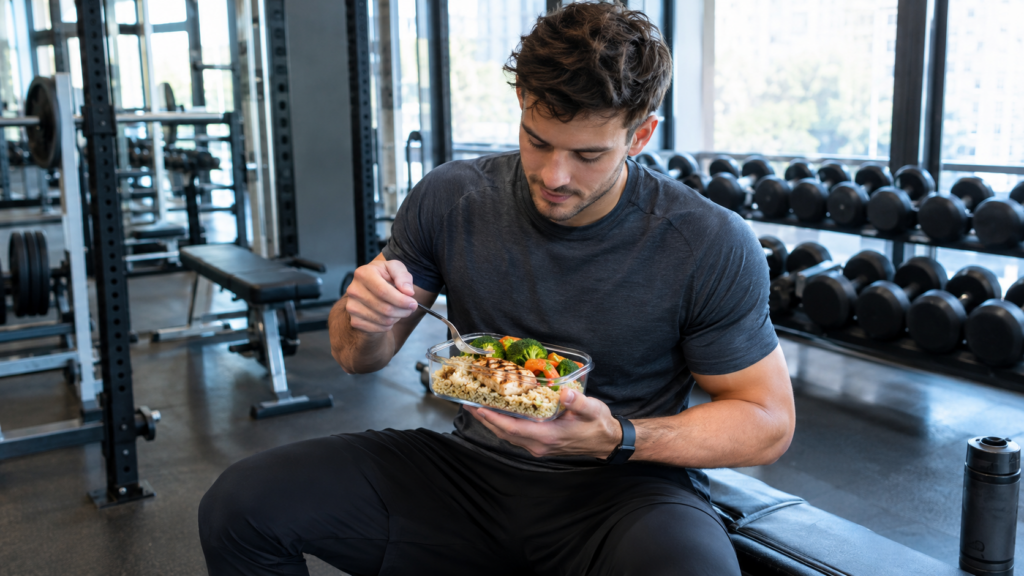
- Brown rice with chicken and vegetables
- Pâtes complètes avec sauce tomate et protéines maigres
- Whole wheat bread with eggs and avocado
- Sweet potato with white fish
Good options 30–60 minutes beforehand:
- A banana with a handful of almonds
- A Greek yogurt with red berries
- A slice of whole-wheat bread with almond butter
- A banana, oat, and plant-based milk smoothie
What to avoid before a workout
Unlike carbohydrates, there are certain foods you should absolutely avoid before a workout at our gym in Lonay:
- Fatty foods — they slow down digestion and weigh the body down.
- High-fiber foods — risk of digestive discomfort during exercise
- Ultra-processed foods — pic de glycémie suivi d’une chute d’énergie
- Too much protein — difficiles à digérer rapidement avant l’effort
Hydration — often overlooked, always essential
Even before considering food, hydration is the absolute priority. Indeed, dehydration amounting to just 2% of body weight is enough to reduce athletic performance by 10% to 20%, according to a study in the European Journal of Sport Science.
Here is what our fitness coaches in Morges recommend to stay well-hydrated:
- Drink 500 ml of water in the 2 hours before your session.
- Bring your water bottle to every class at our gym in Lonay.
- Drink regularly during exercise — without waiting until you are thirsty
- Avoid sugary drinks and sodas before the session.
What to eat AFTER a workout?
It is after the session that your body enters its muscle-rebuilding phase. What you eat in the 30 to 60 minutes following your workout at our fitness club in Lonay is crucial for optimizing this recovery.
The anabolic window — act fast
The 30 to 60 minutes following a workout constitute what is known as the anabolic window—the period when your body is most receptive to nutrients and protein synthesis is at its peak. In other words, it is the ideal time to nourish your muscles and accelerate their recovery.
What to eat after a workout
After a full-body, C.A.F., or weight training session in our gym in Morges, your body primarily needs two types of nutrients:
1. Protein — to rebuild muscle
Protein is the building block of your muscles. After exercise, your muscle fibers sustain micro-tears—this is normal; it is what makes them grow larger and stronger. Protein helps repair and rebuild them to be stronger.
Good sources of post-workout protein:
- Chicken or turkey breast
- Whole eggs or egg whites
- Fish — salmon, tuna, cod
- 0% Greek yogurt or fromage blanc
- Legumes — lentils, chickpeas
- Whey protein if you struggle to meet your intake requirements.
2. Carbohydrates — to replenish energy stores
During a workout, your body draws on its glycogen reserves—the fuel stored in your muscles. After the session, you need to replenish these stores to be ready for your next workout at our gym in Lonay.
Good sources of post-workout carbohydrates:
- White or brown rice
- Sweet potato
- Whole wheat bread
- Quinoa
- Fruit — banana, dates, grapes
Ideal post-workout meal:
- Grilled chicken + brown rice + steamed vegetables
- Egg omelet + whole wheat bread + avocado
- Salmon + sweet potato + broccoli
- Banana, whey, and almond milk protein smoothie + rolled oats
What to avoid after a workout
- Skipping the post-workout meal — that’s the worst thing you can do for your recovery.
- Alcohol — it inhibits protein synthesis and significantly slows down muscle recovery.
- Ultra-processed foods — they provide empty calories without nutrients beneficial for recovery.
Nutrition based on your goal
Our personal trainers in Morges always tailor nutritional recommendations to each member's goals. Here are the general guidelines based on your specific situation:
You want to lose weight.
Eat a light meal before the session and prioritize protein afterwards—while slightly reducing post-workout carbohydrates. The goal is to maintain muscle mass while creating an overall calorie deficit. Our spinning and circuit training classes are particularly well-suited to this goal.
You want to build muscle mass.
Increase your protein AND carbohydrate intake—both before and after your workout. Your body needs a caloric surplus to build muscle. Working out at the gym in Morges, combined with sufficient protein intake, is the winning formula.
You want to improve your performance in group classes.
Focus on carbohydrates before intense classes like spinning or circuit training, and on protein after strengthening classes like Pilates or full-body workouts.
One last piece of advice from our coaches in Lonay
Sports nutrition is about habits, not perfection. You don’t need to weigh every gram of rice or count every calorie to make progress. Start by applying the basics—eating before and after your workout, and staying hydrated—and you’ll quickly feel the difference during your sessions at the gym in Lonay.
If you want to take things further and get a personalized nutrition plan tailored to your goals and training program, our certified coaches are here to support you through personalized coaching.
Conclusion — Eat well, progress fast
Training at our gym in Lonay is half the battle. The other half takes place in your kitchen. Eat carbohydrates before your workout for energy, and protein and carbohydrates afterwards for recovery—and stay hydrated throughout the day.
These simple principles, consistently applied, make a real difference to your results—whether you are aiming for weight loss, muscle gain, or simply better overall fitness.
Want to make faster progress? Start by trying our group classes and talk to your coach about nutrition during your very first session.