


How to recover effectively after an intense workout
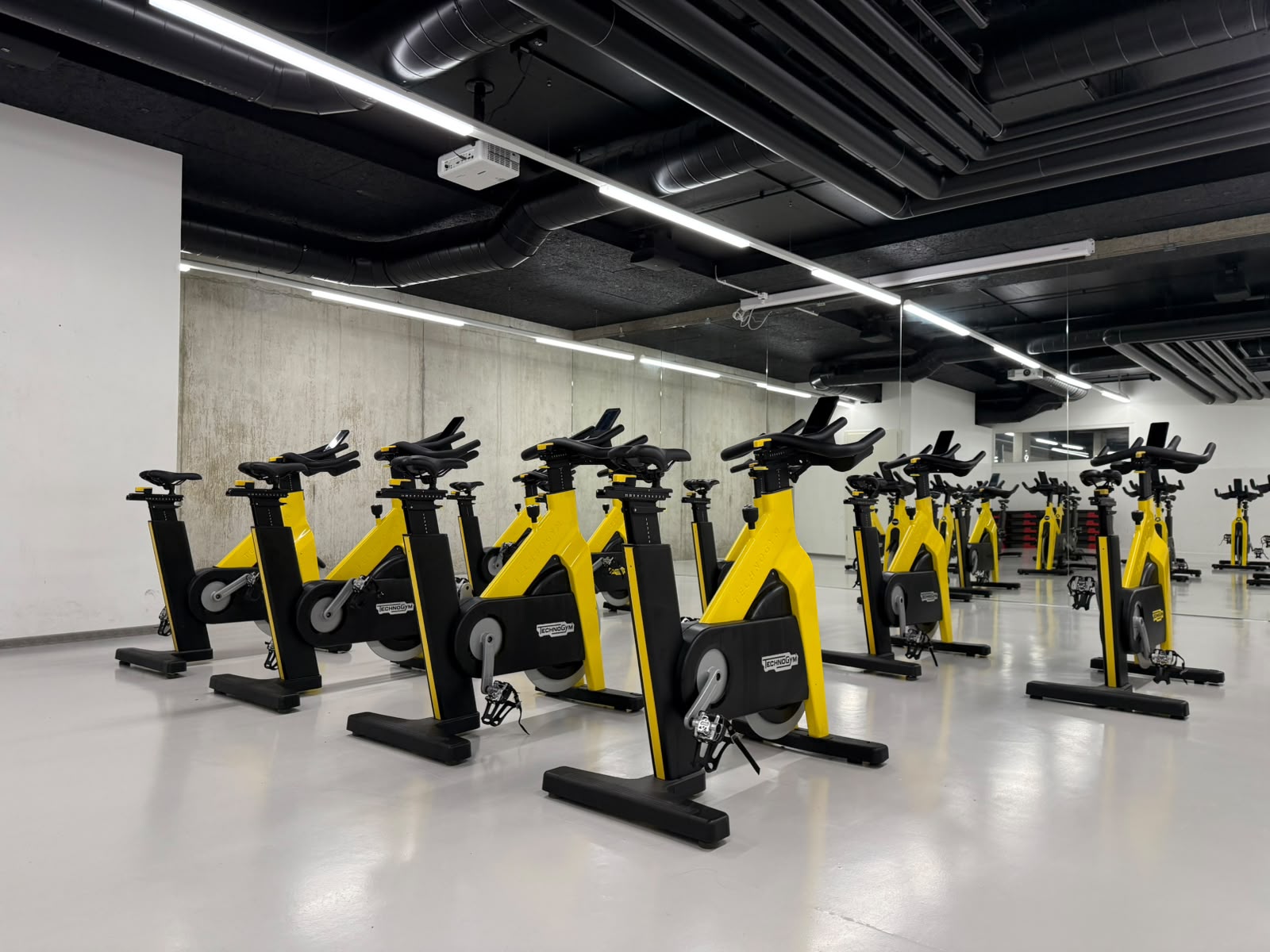
You gave it your all during your circuit training or spinning session at our gym in Lonay. Well done—that’s exactly the right mindset. But what you do in the hours and days following that session is just as important as the workout itself.
Recovery is the phase where your body rebuilds, strengthens, and truly makes progress. Without it, you accumulate fatigue, risk injury, and stagnate—even if you train hard. Yet, it is the part that most amateur athletes completely neglect.
Here is some advice from our fitness coaches in Morges at Society Sport Lonay on how to recover smartly and progress faster.
Why recovery is just as important as training
When you take a full-body class or complete an intense weight training session at our gym in Morges, you create micro-tears in your muscle fibers. This isn’t a bad thing—it is precisely this process that makes your muscles stronger and larger. However, for this process to work, your body needs time and resources to repair itself.
If you string together intense sessions without sufficient recovery, your muscles don’t have time to rebuild. As a result, you stop making progress—and may even regress. This is known as overtraining, and our certified coaches in Lonay unfortunately see it all too often among highly motivated members who push themselves too hard.
According to the American College of Sports Medicine, insufficient recovery is the primary cause of performance plateaus among amateur athletes. In other words, sometimes less is more—provided you recover intelligently.
1. Les étirements — commencez par là avant de quitter la salle
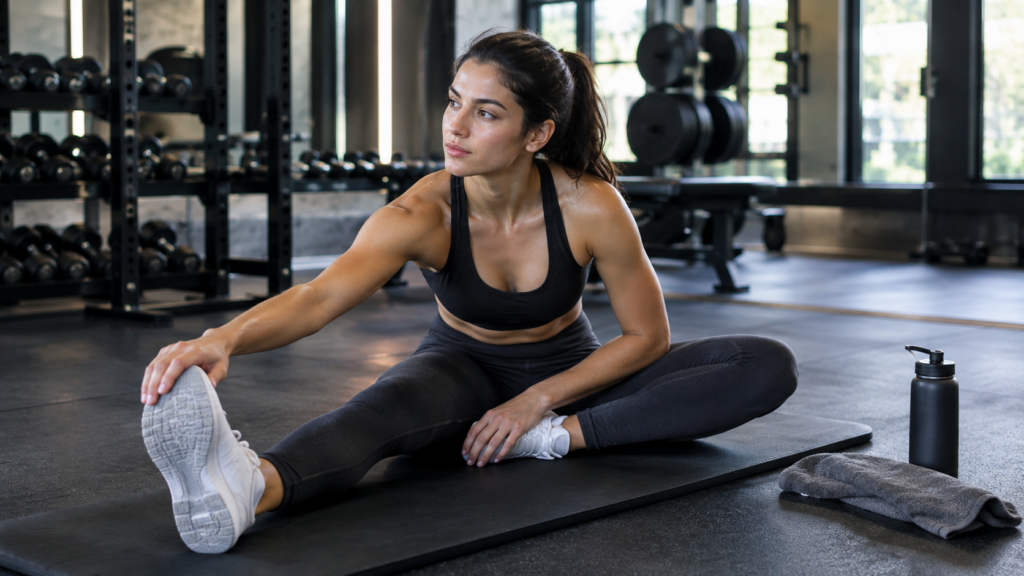
Le premier geste de récupération commence encore dans notre fitness club in Lonay — juste après votre séance. Les étirements post-entraînement sont souvent bâclés ou carrément sautés par manque de temps. C’est une erreur.
Indeed, after intense exertion, your muscles are contracted and shortened. Stretching them immediately after the session helps reduce muscle soreness, improve blood circulation in the muscles that were worked, and maintain your flexibility in the long term.
Our certified coaches in Lonay recommend at least 5 to 10 minutes of stretching after every intense workout. In fact, our yoga and Pilates classes are excellent tools for active recovery—many of our members attend them the day after an intense session to boost circulation and release muscle tension.
2. Post-workout nutrition — the 30-minute window
We covered this in our article on sports nutrition—but it is so important that we’re mentioning it again here. In the 30 to 60 minutes following your workout at our gym in Lonay, your body is in its peak recovery phase.
It is during this window that you need to provide your body with the nutrients it needs:
- Protein to rebuild muscle fibers — chicken, eggs, Greek yogurt, whey
- Carbohydrates to replenish energy stores — rice, sweet potato, fruit
- Water to rehydrate — at least 500 ml in the hour that follows
Skipping that post-workout meal means wasting a large part of the effort you put in at our gym in Lonay. It’s like building a house without using cement—the bricks won’t hold.
3. Sleep — your number one recovery tool
If you were to take away just one thing from this article, it is this: sleep is the most powerful recovery tool in existence—and it is completely free.
It is during deep sleep that your body secretes growth hormone—the primary hormone responsible for muscle rebuilding and recovery. In other words, your muscles do not grow while you are training at our fitness club in Lonay—they grow while you sleep.
According to a study by Stanford University, athletes who sleep nine hours a night improve their performance by an average of 9% compared to those who sleep six hours. This figure is significant—and it applies to both amateur and professional athletes.
Our personal trainers in Morges recommend:
- A minimum of 7 to 9 hours of sleep per night
- A regular bedtime — even on weekends
- Avoid screens for 30 minutes before going to sleep.
- A cool, dark bedroom for deeper sleep
4. Active recovery — move without straining
Many athletes think that rest days mean lying on the couch all day. In reality, active recovery—light activity that boosts circulation without tiring the muscles—is often more effective than complete rest.
At our fitness center in Lonay, our yoga and Pilates classes are perfectly suited for active recovery. They improve blood circulation in tired muscles, reduce muscle soreness, and maintain your flexibility—without causing additional fatigue.
So, the day after an intense C.A.F. or spinning class, a yoga session at our Lonay gym is exactly what your body needs to recover faster. In fact, that is why our most regular members consistently combine high-intensity workouts with recovery classes in their weekly schedules.
5. Hydration — continue after the session
Hydration doesn’t stop when you leave our gym in Lonay. During exercise, your body loses water and electrolytes through sweat—and these need to be replenished in the hours that follow.
Here is what our certified coaches in Lonay recommend for proper post-session rehydration:
- Drink at least 500 ml of water within the hour following your session.
- Continue drinking regularly for the next 3 to 4 hours.
- If your workout was particularly intense or if you sweated a lot, add an electrolyte drink.
- Avoid alcohol after a workout — it hinders muscle recovery and worsens dehydration.
A good indicator of hydration is the color of your urine. If it is pale, you are well-hydrated. If it is dark, drink more water—it’s as simple as that.
6. La physiothérapie — un avantage unique chez Society Sport Lonay
At Society Sport Lonay, we offer an advantage that few gyms in the Morges-Renens area provide: an on-site physiotherapy clinic.
If you experience persistent pain, lingering muscle tension, or joint discomfort after a workout, there is no need to book an appointment elsewhere and wait weeks. Our physiotherapists are available right here at our Lonay gym to help you recover faster, identify the source of your pain, and provide you with tailored recovery exercises.
In fact, this is one of the services our members appreciate most—and one of the reasons why our fitness club in Lonay stands out from other gyms in the area. Preventive physiotherapy is just as important as curative physiotherapy—don’t reserve it solely for treating injuries.
7. The foam roller — your at-home recovery ally
The foam roller—or massage roller—is the most accessible and effective recovery tool you can use at home. It allows you to massage the fascia (the connective tissue surrounding your muscles) and release tension built up after a workout in our fitness center in Lonay.
Our personal trainers in Morges recommend using a foam roller on the areas most heavily worked during the class:
- After C.A.F or full body → quadriceps, hamstrings, glutes
- After spinning → calves, quadriceps, lower back
- After circuit training → shoulders, back, quadriceps
- After Abs Attack → lower back, hips
Spend about 60 seconds on each area—moving slowly and focusing on points of tension. It is slightly uncomfortable—but that’s a sign it’s working.
How much recovery time is needed between sessions?
This is a question our personal trainers in Morges often hear. The answer depends on the intensity of the session and your fitness level:
| Session type | Recommended recovery time |
|---|---|
| Light session — yoga, Pilates | 24 hours |
| Moderate-intensity session — full body, legs/abs/glutes | 48 hours |
| Intense session — spinning, circuit training | 48 to 72 hours |
| Very intense session — heavy weight training | 72 hours |
This doesn’t mean you can’t go to the gym during these periods. It simply means it is best to alternate the muscle groups you work. For instance, after an intense C.A.F. class, a yoga session the next day is perfect—it targets different muscles and aids in active recovery.
Conclusion — Recover better, progress faster
Recovery is not optional—it is an integral part of your fitness program at our gym in Lonay. Stretch after every session, eat within the following 30 minutes, get enough sleep, stay hydrated, and take advantage of our on-site physiotherapy clinic if needed.
These simple habits, consistently applied, will make a real difference to your results—and allow you to keep training in the long run without injury or burnout.
Not yet a member of our fitness club in Lonay? Take advantage of our free trial session to discover our classes, meet our coaches, and visit our physiotherapy practice—with no obligation.